

In the aerospace industry, the operation of plane antenna access locks is a critical aspect that ensures the safety, functionality, and security of aircraft systems. As a leading plane lock supplier, we have in - depth knowledge of how these locks work and their importance in the overall performance of an aircraft.
The Basics of Plane Antenna Access Locks
Plane antenna access locks are designed to control access to the antenna compartments on an aircraft. Antennas are essential for communication, navigation, and surveillance systems. They need to be protected from unauthorized access, as well as from environmental factors such as dust, moisture, and debris.
The locks are typically installed on the hatches or panels that provide access to the antenna areas. They come in various types, each with its own unique operating mechanism.
Types of Plane Antenna Access Locks and Their Operation
Lift and Turn Combination Lock
One of the popular types of plane antenna access locks is the Lift and Turn Combination Lock. This lock operates based on a combination of numbers. To open the lock, the user first needs to lift the locking mechanism slightly. This action disengages the initial locking position. Then, the user has to turn the dial to enter the pre - set combination.
The combination is set during the installation or configuration phase. The lock uses a series of tumblers and gears inside. When the correct combination is entered, the tumblers align in a specific pattern, allowing the locking bolt to retract. This retraction of the bolt releases the hatch or panel, providing access to the antenna compartment.
The advantage of this type of lock is its security. Since it requires a specific combination, it reduces the risk of unauthorized access. It is also relatively easy to operate, making it suitable for both ground crew and maintenance personnel.
Paddle Quarter Turn Lock
The Paddle Quarter Turn Lock is another common option. This lock features a paddle - shaped handle. To operate the lock, the user simply grasps the paddle and turns it a quarter - turn.
Inside the lock, there is a cam mechanism. When the paddle is turned, the cam rotates. As the cam rotates, it either engages or disengages the locking bolt. When the bolt is engaged, it secures the hatch or panel tightly. When the bolt is disengaged, the hatch can be opened.
This type of lock is known for its quick operation. It is ideal for situations where rapid access to the antenna compartment is required, such as during emergency maintenance or system checks.
Keyed Compression Lever Latch
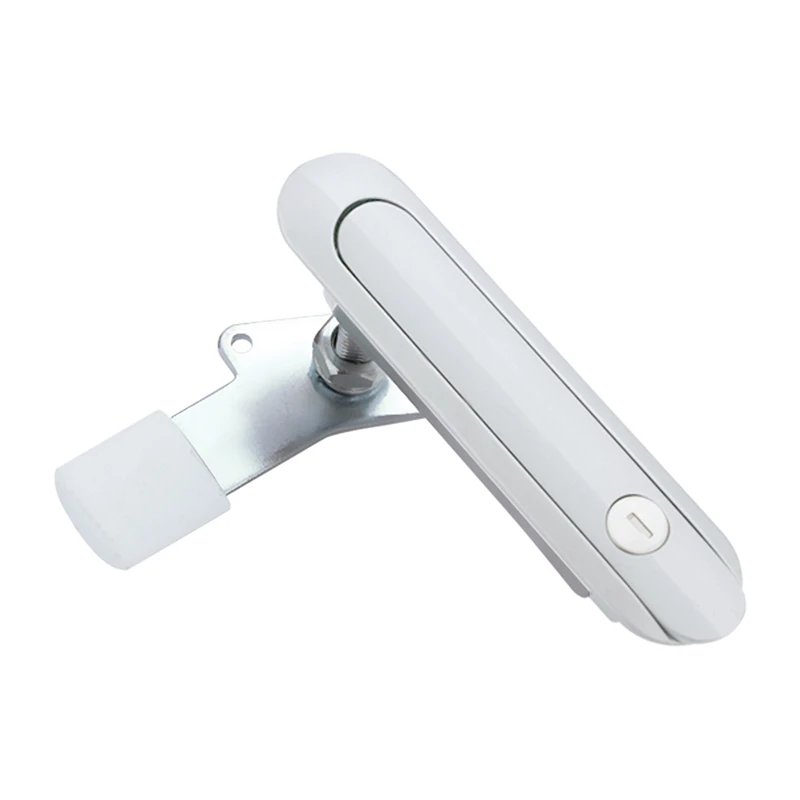
The Keyed Compression Lever Latch is a more complex but highly secure option. This lock uses a key to operate. When the key is inserted into the lock cylinder and turned, it activates a series of internal components.
The lock has a compression mechanism. As the key is turned, the lever is pulled down. This pulling action compresses a spring - loaded bolt. When the bolt is compressed, it retracts from the locking position, allowing the hatch or panel to be opened. When the hatch is closed and the key is turned in the opposite direction, the spring expands, pushing the bolt back into the locking position, securing the hatch tightly.
This type of lock provides a high level of security, as it requires a specific key. It is often used in areas where strict access control is necessary, such as on military aircraft or in sensitive communication antenna compartments.
Factors Affecting the Operation of Plane Antenna Access Locks
Several factors can affect the operation of plane antenna access locks.
Environmental Conditions
Aircraft operate in a wide range of environmental conditions. Extreme temperatures, high humidity, and exposure to saltwater (in the case of naval aircraft) can all impact the performance of the locks. For example, in cold temperatures, the lubricants inside the lock may thicken, making it more difficult to turn the dial or operate the lever. High humidity can cause corrosion of the metal components, which may lead to jamming of the locking mechanism.
To mitigate these issues, our locks are designed with high - quality materials that are resistant to corrosion. We also use special lubricants that can withstand a wide range of temperatures.

Vibration and Shock
During flight, aircraft experience significant vibration and shock. These forces can cause the locking mechanism to loosen or malfunction. To address this, our locks are engineered with anti - vibration features. For example, we use locking washers and tight - fitting components to ensure that the lock remains secure even under extreme vibration.
Wear and Tear
Over time, the repeated use of the locks can cause wear and tear. The tumblers in a combination lock may become worn, or the cam in a quarter - turn lock may lose its smoothness. Regular maintenance is essential to ensure the proper operation of the locks. We provide detailed maintenance guidelines to our customers, including instructions on how to clean, lubricate, and inspect the locks.
Importance of Proper Lock Operation
The proper operation of plane antenna access locks is crucial for several reasons.
Safety
Ensuring that the hatches or panels are securely locked is essential for the safety of the aircraft. If a lock fails to operate correctly and the hatch opens during flight, it can cause aerodynamic problems, as well as damage to the antenna and other components. This can lead to a loss of communication or navigation capabilities, which are critical for the safe operation of the aircraft.
System Functionality
Antennas are vital for the proper functioning of the aircraft's communication, navigation, and surveillance systems. If unauthorized access occurs or if the lock malfunctions, it can disrupt these systems. For example, if dust or debris enters the antenna compartment due to a faulty lock, it can interfere with the antenna's signal reception and transmission.
Security
In today's world, security is a top priority. Plane antenna access locks help prevent unauthorized access to sensitive systems. Whether it is protecting military communication frequencies or commercial airline navigation data, the proper operation of these locks is essential for maintaining the security of the aircraft and its passengers.
Conclusion
As a plane lock supplier, we understand the critical role that plane antenna access locks play in the aerospace industry. The operation of these locks, whether it is a lift - and - turn combination lock, a paddle quarter - turn lock, or a keyed compression lever latch, is based on precise mechanical and engineering principles.
We are committed to providing high - quality locks that can withstand the harsh environmental conditions and operational demands of the aerospace industry. Our locks are designed to ensure safety, functionality, and security.
If you are in the aerospace industry and are looking for reliable plane antenna access locks, we invite you to contact us for a procurement discussion. We can provide you with detailed product information, technical specifications, and pricing options. Let us work together to ensure the safety and efficiency of your aircraft's antenna systems.
References
- Aircraft Locking System Design Manual, Aerospace Engineering Publications
- Handbook of Aerospace Materials and Their Applications, Material Science Press
- Environmental Effects on Aerospace Components, Aviation Research Institute


