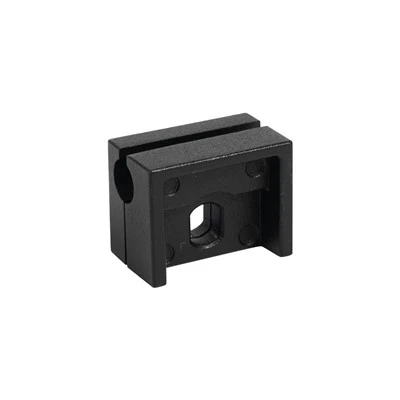
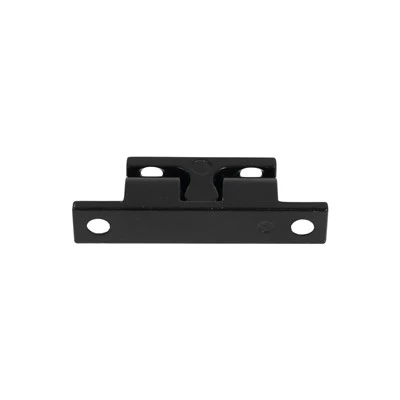
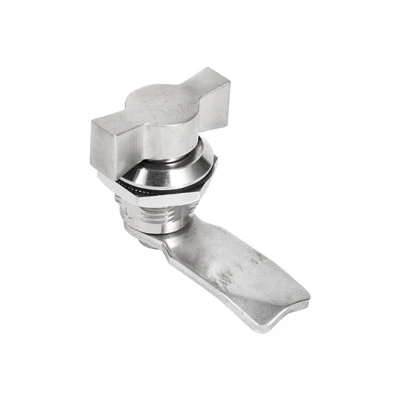
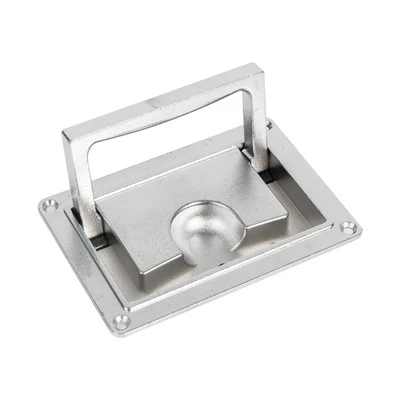
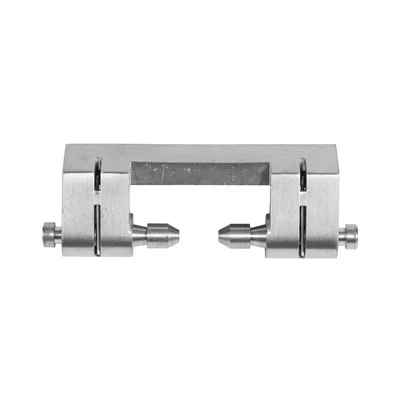
An industrial enclosure may need a door stay, a door stop, or both, depending on which part of the door movement needs control. An opening limiter restricts how far the door swings. A closing buffer cushions contact where the door meets the frame. Keeping a door securely open for service is another requirement to confirm. Start with the required behavior, then check the actual mechanism and installation drawing.
Identify the movement you need to control
Describe what happens at the problem point. Does the opening door approach an adjacent cabinet, pull on a cable, or pass the intended service angle? Does the closing door strike the frame? Or must the technician keep it at a working position? These observations identify the function to specify more clearly than a request for a general door accessory.
| Required result | Function to confirm | Key review point |
|---|---|---|
| Limit opening travel | A stay or other opening limiter | Mounting geometry and the angle at which travel stops |
| Cushion closing contact | A buffer or stopper at the contact location | Contact position and its effect on the closed door gap |
| Keep the door open for service | A defined holding or restraint function | Retention, release procedure, and suitability for the application |
Product names can vary between suppliers. In this comparison, a door stop means a closing buffer. Confirm the function of the proposed part: a component described as a stay may limit travel without providing a holding function, and a closing buffer does not establish the maximum opening angle.
Map the complete opening path
Show the hinge axis, door outline, handle, and nearby obstructions on the enclosure drawing. Include equipment attached to the inner face and any cables that move with the door. Identify the opening angle needed for inspection or replacement work and the space available around the cabinet.
Check intermediate positions as well as the fully open position. A linkage can clear the cabinet when extended but interfere with a folded return or mounted component while the door moves. Confirm that the proposed limiting position provides the required access before the door reaches an obstruction. Include any possible interference between the stay and the hinge or latch hardware.
Check both mounting points of a door stay
A stay connects moving and fixed parts of the enclosure. Record its mounting locations relative to controlled door and frame surfaces, together with the available material thickness, reinforcement, and fastener access. The installed movement follows those attachment positions, so a part length alone is insufficient to confirm the opening angle.
Ask the supplier for the applicable drawing, attachment details, permitted travel, and any stated application limits. Give the supplier the door dimensions, orientation, mass, attached equipment, and expected operating conditions. Have the enclosure designer review the mounting arrangement and any loads the application requires it to carry. Avoid assigning a support capacity from the product name or material alone.
Check how a closing buffer affects latching
Locate the intended contact between the stopper, door, and frame. Confirm that the buffer meets the mating surface as designed and stays clear of the latch, gasket, and hinges. Its installed projection and behavior under contact form part of the closed door geometry.
A buffer that prevents the door from reaching its intended seated position can change latch engagement or gasket contact. Compare the closed gaps and lock operation with the approved assembly. Confirm the material and finish suitability for the actual exposure and cleaning conditions. If cushioning or noise reduction is an acceptance requirement, define how it will be evaluated on the complete cabinet.
Specify holding and release functions separately
If the door must remain open, describe the required position and the conditions under which it must stay there. Ask how the mechanism retains and releases the door, and what operating conditions the supplier's evidence covers. An opening limit, a quick-release feature, and a holding function describe different behaviors.
Check that the release is accessible in the installed position, including after internal equipment is fitted. Define whether release is used during ordinary closing, adjustment, or door removal. The service procedure should explain how the door is controlled during release. A removable connection also needs a clear method for restoring the approved operating arrangement afterward.
Trial the arrangement on an assembled door
Use production-intent door and frame parts with the normal hinges, latch, gasket, finish, and nearby equipment. Record the stay and stopper references, mounting positions, and any spacers. Operate the door through its full required movement and check:
- The door reaches the required service position without collision.
- The stay and its connections move freely throughout travel.
- The defined opening limit occurs at the intended position.
- Any holding and release functions work as specified and remain accessible.
- The closing buffer contacts the intended surface and the latch still engages and releases correctly.
Repeat the check after any mounting adjustment. Where door or frame variation affects the result, include representative dimensional conditions in the trial. Keep the final mounting coordinates and acceptance observations with the approved drawing so repeat production uses the same arrangement.
Send suppliers the required behavior and enclosure details
A useful inquiry includes the door and frame drawing, hinge position, required opening angle, available mounting space, intended contact locations, holding requirement, release access, and supplied contents. Specify whether the quotation should cover brackets, fasteners, and mating parts as well as the main accessory.
ZONZEN describes its quick-release cabinet door stay as an opening-angle limiter, and its cabinet door buffer stopper as cushioning contact during closing. Use those functions to begin the selection, then confirm the exact part, mounting geometry, and required operation against the enclosure drawing and trial result.