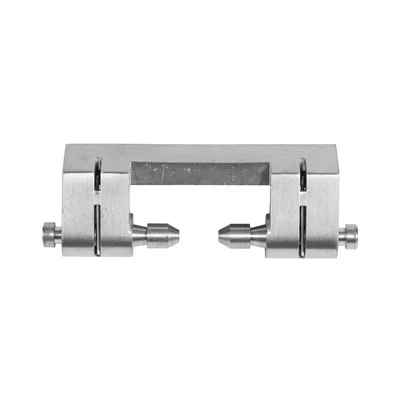
The buckle, a common connecting element, is widely present in our daily life and industrial applications. Its formation process integrates multidisciplinary knowledge such as material science, mechanical design and precision manufacturing. This article will explain the formation secrets of buckles from a professional perspective.
In terms of material selection, the manufacturing of buckles must first consider the strength, corrosion resistance and processing performance of the material. Commonly used materials include stainless steel, aluminum alloy and plastic, etc. These materials are strictly screened to ensure the stability and durability of the buckle during use.
The formation of buckles begins with a precise design stage. According to the use requirements and expected loads, the designer uses computer-aided design (CAD) software to draw detailed drawings of the buckle, including key parameters such as external dimensions, connection methods and mechanical structures. This link ensures the rationality and feasibility of the buckle design.
Then, enter the manufacturing stage. Metal buckles usually use stamping and bending processes. A high-precision stamping die is used to punch out a preset shape on the metal sheet, and then a bending machine is used to form a three-dimensional structure. Plastic buckles are mostly made by injection molding, and the molten plastic is injected into a precision mold and cooled and solidified.
Quality control is crucial during the manufacturing process. Each batch of buckles must undergo rigorous testing before leaving the factory, including tensile testing, fatigue testing, and corrosion resistance testing, to ensure that the product meets the design requirements and usage standards.
In addition to traditional manufacturing processes, modern buckle production has also incorporated many innovative technologies, such as 3D printing and laser cutting, which have improved production efficiency, reduced costs, and allowed for more complex designs.
The formation of buckles is a complex process that integrates multiple links such as material selection, precision design, manufacturing process, and quality control. It is the rigor and professionalism of this process that ensures the reliable performance of buckles in various application scenarios and meets the diverse needs of the market and consumers.